Every great coin collection starts with curiosity but grows with the right tools. From that very first moment one holds a coin up to the light, wondering about its history, one enters a world where tiny details matter. A simple loupe, a good scale, or the best coin identifier app may reveal stories hidden in metal and guide your journey of collecting. Knowing which tool to use at what stage turns guesswork into skill and beginners into confident collectors.
The Tools Every Beginner Will Need
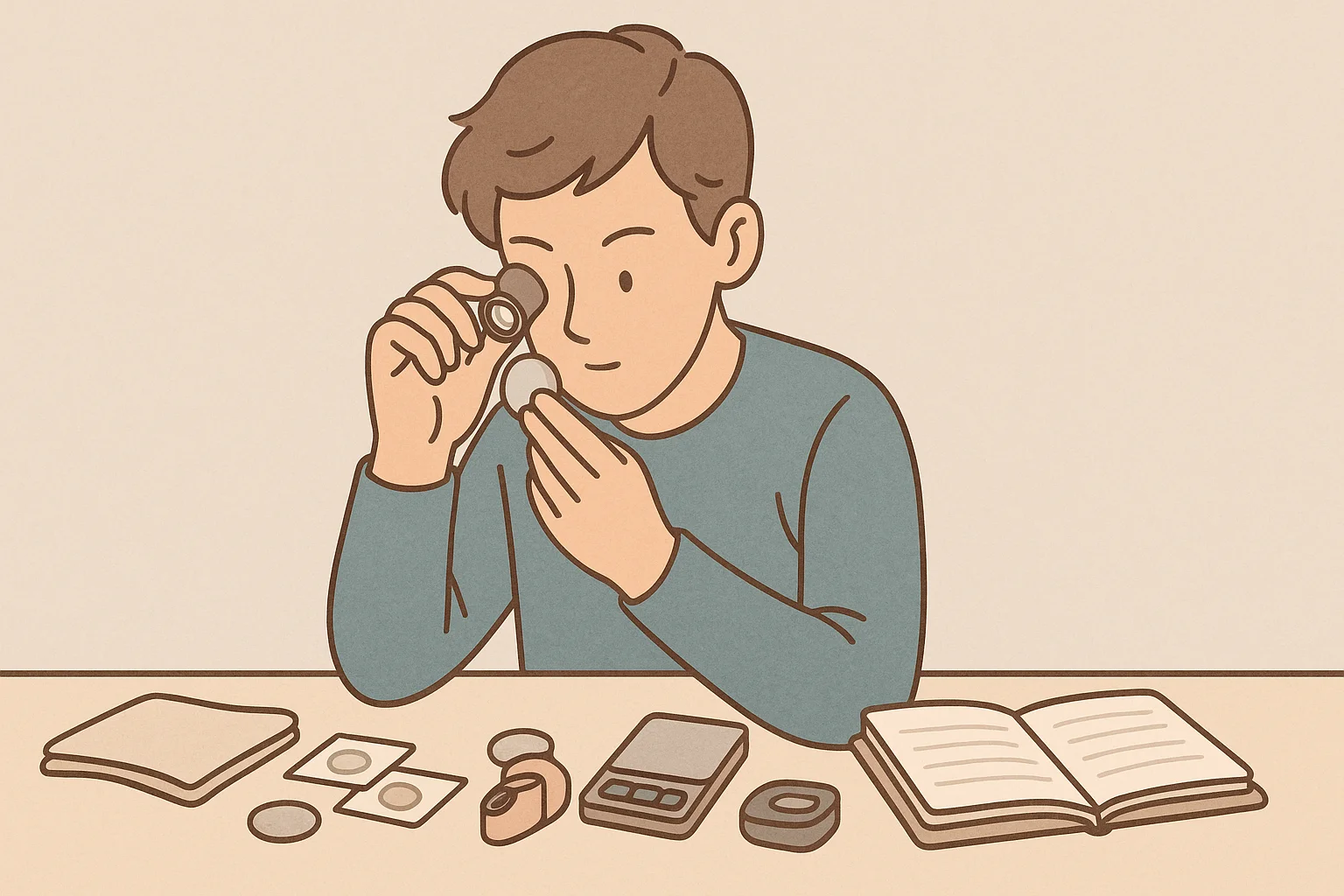
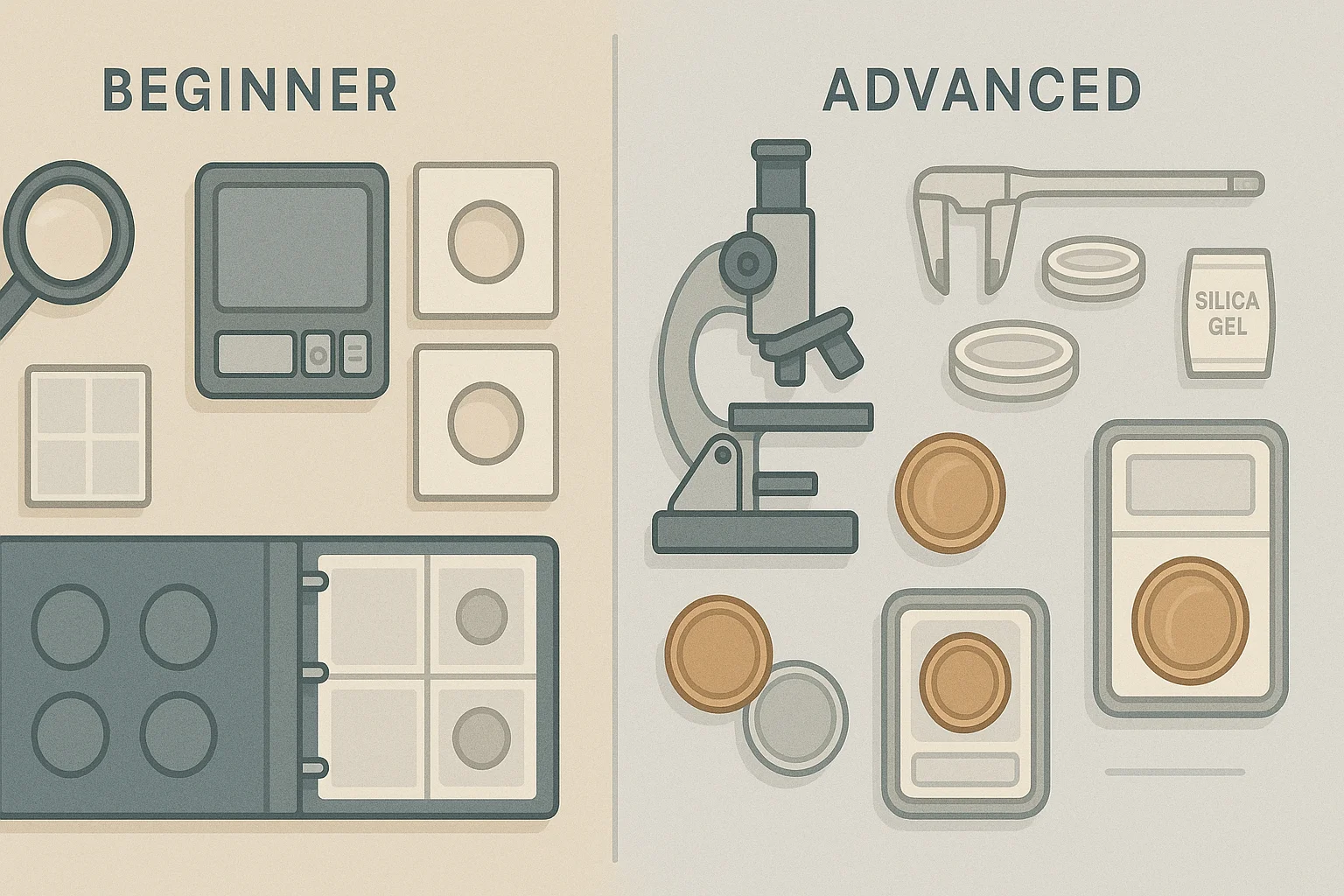
A beginner’s toolkit does not have to be big or pricey, but just needs to provide clarity, accuracy, and safe storage for the components. These will be your staples that will create the foundation for your future collecting.
Magnifying Glass or Loupe (10x–20x)
Your most critical first tool is a loupe. This will reveal to you those tiny details of what a coin really is: the mint marks, minor varieties, small errors, wear patterns, and authenticity clues. A 10x magnification serves very well for general inspection, while 20x is perfect for finer detail. This very simple instrument teaches anyone who has just started how to properly observe the coins.
Safe Storage: Holders, Flips, and Albums
Coins remain valuable only when they are stored correctly. Early collectors often underestimate how quickly fingerprints, humidity, and friction can harm surfaces. The safest beginner solutions include:
- Acid-free paper or Mylar flips
- Snap-tight plastic capsules
- Basic storage albums with non-PVC materials
These protect coins from scratches, dust, and environmental damage. Good storage habits from day one preserve coin condition and long-term value.
Basic Digital Scale and Calipers
Weight and size matter. Many counterfeit coins mimic design details but fail to match official specifications. A small digital scale allows you to confirm the correct weight, while calipers verify diameter and thickness. These measurements help beginners spot obvious fakes and learn the physical characteristics of different coin types.
Printed Guides and Entry-Level References
A reliable reference book gives beginners historical context and pricing ranges. Publications like the Red Book help identify U.S. coins, while country-specific catalogs support international collecting. Reference materials teach you terminology, grading basics, and historical timelines.
Beginner-Friendly Digital Support
While printed guides are essential, beginners often need quick answers. Modern collectors use digital tools to complement traditional references. Among them, Coin ID Scanner stands out for its simplicity and instant accuracy. It is the best free coin identifier app that identifies coins from a photo and gives clear details such as minting years, composition, and size. Such a function range makes it ideal for hobbyists who want fast, confident verification.
Leveling Up: Tools for Intermediate and Advanced Coin Collectors
As your interest grows beyond basic identification and storage, you’ll naturally start noticing finer details — die varieties, surface texture, strike quality, and subtle minting flaws. At this stage, collectors benefit from more specialized tools that deepen analysis and improve accuracy. These intermediate and advanced instruments make coin evaluation more precise, help authenticate valuable pieces, and support the long-term refinement of your collection.
High-Magnification Microscopes
A loupe is perfect for beginners, but advanced collectors often need to examine features that are invisible at lower magnification. Digital or optical microscopes allow you to study:
- Die cracks and cuds
- Doubled dies
- Microprinting and intricate design elements
- Hairline scratches and cleaning damage
- Mint mark alterations
A microscope becomes particularly important for error specialists and those buying rare or high-grade coins.
Professional Digital Scale & Electronic Calipers
Intermediate collectors move to higher-precision instruments. Advanced digital scales measure weight to the hundredth of a gram, and electronic calipers provide extremely accurate diameter and thickness readings.
This upgraded accuracy helps detect:
- Wrong-planchet errors
- Underweight counterfeit bullion
- Altered edges or filed-down surfaces
- Re-strikes or forgeries that slightly miss official standards
Professional-grade measurement tools are essential for anyone collecting gold, silver, or high-value error coins.
Grading Slabs & Third-Party Certification
When your collection reaches the investment level, proper grading and authentication become essential. This step ensures:
- Verified authenticity
- Protection from environmental damage
- Trusted market value
- Better resale potential
Third-party grading services such as PCGS and NGC seal coins inside tamper-evident slabs. Collectors often start with raw coins, then send valuable pieces for certification once they understand grading more deeply.
Advanced Storage and Organization
Intermediate collectors often outgrow simple flips and album pages. At this stage, many turn to:
- Airtight capsules
- Archival-grade storage boxes
- Silica packs to control humidity
- Fireproof safes for high-value pieces
A more structured setup helps you scale your collection safely and neatly.
Advanced Numismatic Software and Digital Support
As your collection expands, so does the need for efficient cataloging and research. A modern digital coin appraisal app handles detailed tracking, photo organization, and searchable databases — all essential for a larger and more diverse collection.
A streamlined option is Coin ID Scanner, which offers premium-level tools such as:
- Smart filters for sorting by country, metal, year, and type
- Manual search by catalog or coin ID
- Access to a wide global database of over 187,000 listings
- AI guidance that clarifies varieties, authenticity clues, and historical details
These features support collectors who manage large sets and want fast access to accurate, organized information.
The Modern Collector’s Edge: Blending Physical Tools With Digital Intelligence
Today’s coin hobby is shaped by both tradition and technology. While microscopes, loupes, scales, and storage systems remain essential, digital tools now provide speed, accuracy, and convenience that earlier collectors could only dream of. The most successful collectors use a balanced toolkit — combining hands-on inspection with smart digital support to verify details, organize collections, and make informed decisions.
Why Digital Tools Matter in Today’s Numismatic World
Coins now come from all over the world, with endless varieties, metals, and minting quirks. Digital tools help you keep up by offering instant access to information that once required multiple books and hours of research.
Modern collectors rely on digital support to:
- Quickly identify unfamiliar coins
- Cross-check measurements with official specifications
- Compare photos to known varieties or errors
- Track values based on current market trends
- Keep their growing collections structured and searchable
Technology enhances accuracy and confidence at every skill level, reducing the guesswork that often leads to mistakes.
How to Build a Balanced Toolkit
A future-ready toolkit blends physical precision with digital insight. Here’s a practical breakdown:
| Physical Tools | Purpose |
| Loupe (10x–20x) | Daily inspection and detail checking |
| Microscope | High-level error and variety analysis |
| Digital scale & calipers | Authenticity confirmation |
| Holders, capsules, albums | Long-term preservation |
| Certified slabs | Protection for investment-grade coins |
| Digital Tools | Purpose |
| Coin ID Scanner | Fast identification and cataloging |
| Mint databases | Historical research |
| Online market archives | Price comparison |
| Collector forums | Community support |
Using both sets of tools ensures you see every angle — physical, historical, and financial — before adding a coin to your collection.
Choosing the right tools turns the coin hobby from guesswork into a rewarding, informed pursuit. Beginners start with magnifiers, simple storage, and basic measurements. More experienced collectors expand to microscopes, precision instruments, professional grading, and structured storage.
Digital platforms like Coin ID Scanner complete the toolkit by providing instant identification and organized collection management. With a balanced approach, your hobby grows smoother, smarter, and far more enjoyable.