Most collectors chase loud headlines. Famous keys, dramatic errors, and well-known varieties dominate attention. Meanwhile, a different class of Lincoln cents sits quietly in rolls, jars, and dealer trays. These coins look ordinary at first glance. Their value hides in subtle diagnostics, late die states, and condition scarcity. They are not ignored by accident. They are missed because they demand patience.
Quiet pennies worth money exist where population reports stay thin and diagnostics stay modest. Weak strikes blur mint marks. Die wear softens lettering. Minor doubling escapes casual inspection. Many of these cents circulated for decades without notice, often mistaken for common dates. Only careful examination reveals why they stand apart.
Experienced collectors understand this gap. They focus less on hype and more on census data, strike quality, and surface preservation. Auction archives confirm the pattern. Coins once dismissed as routine can cross five figures when identified correctly and preserved in high grade.
What Makes a Penny a “Quiet Rarity”
A penny does not need a famous error to be valuable. Several factors create overlooked scarcity:
- Low survival in high grades: Millions struck, few saved clean
- Subtle diagnostics: Doubling, spacing, or die erosion not visible without magnification
- Weak strikes: Design details fade, masking key identifiers
- Misattribution: Coins confused with common Philadelphia issues
- Late recognition: Varieties identified years after release
These traits explain why such cents stay undervalued for so long. They also explain why professionals keep searching bank-wrapped rolls and mixed bulk lots.
Why Beginners Miss Them
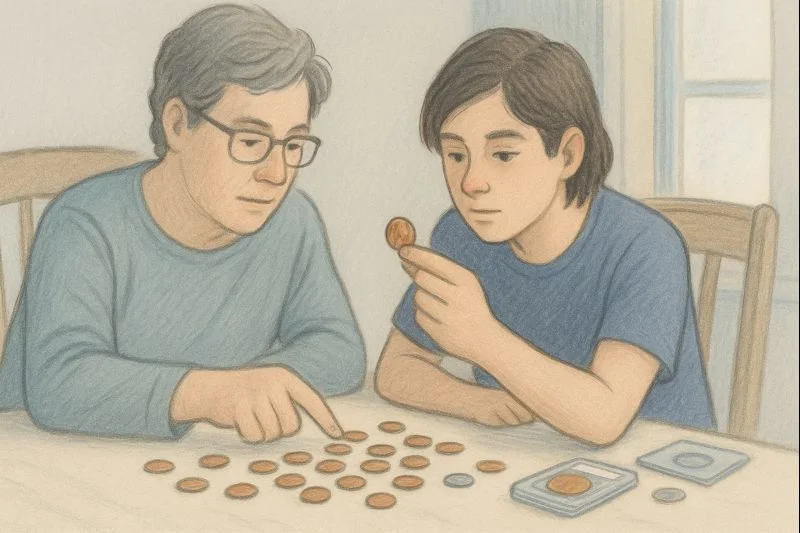
New collectors often rely on surface impressions. Bright color feels valuable. Strong dates feel important. This approach overlooks coins whose value depends on nuance. A weak mint mark or slightly thicker lettering rarely stands out without deliberate inspection.
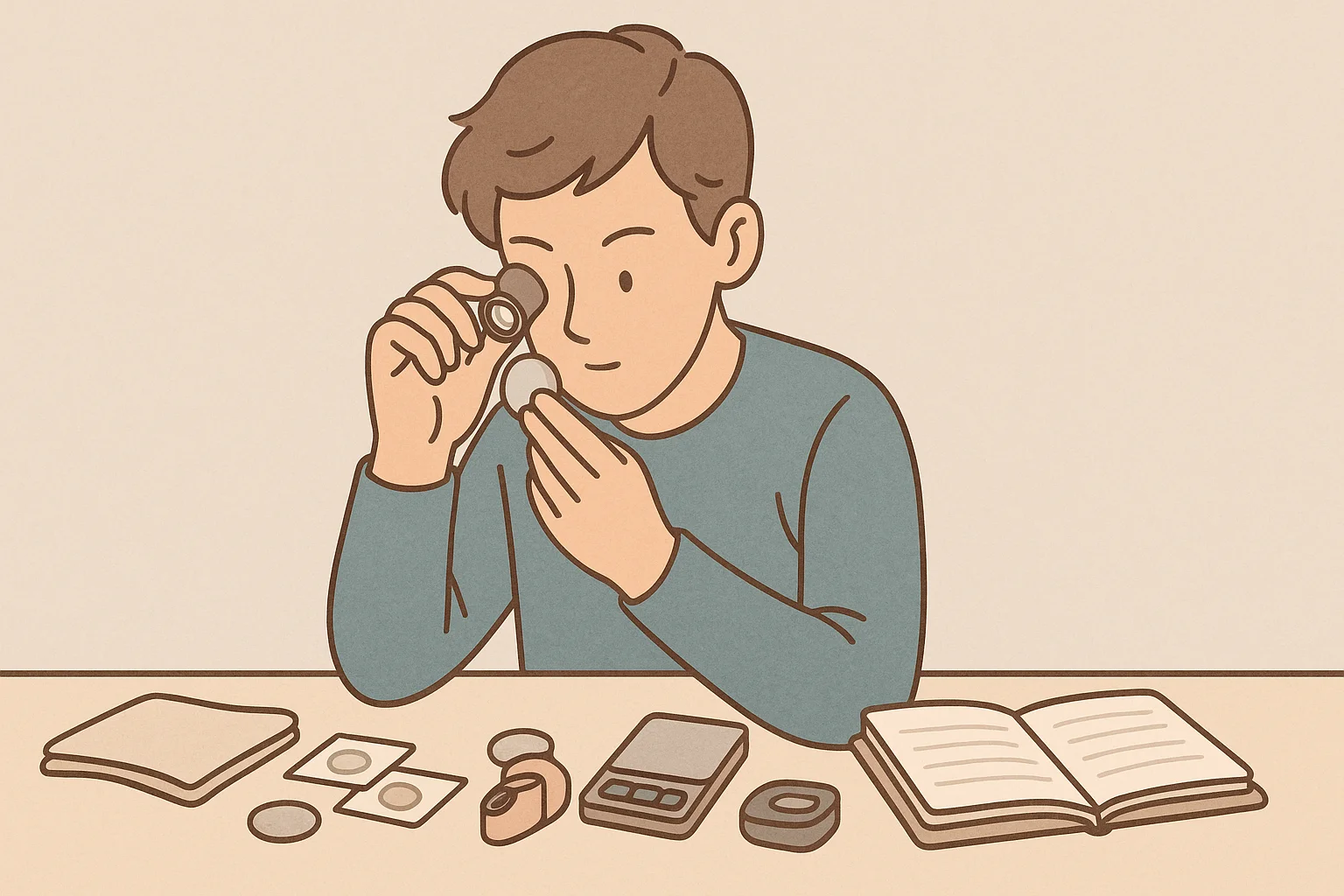
Education shifts the outcome. Once collectors learn to slow down and study specific areas manually and with the Coin ID Scanner App—dates, mint marks, letter spacing—the landscape changes. Common cents start to look different. Patterns emerge. Quiet rarities become visible.
A Different Way to Hunt
Instead of chasing famous keys, quiet rarity hunting rewards discipline. You search fewer coins but inspect them better. You compare strike styles. You check known problem years. You trust data over instinct.
Pennies That Hide in Plain Sight
Quiet rarities share one trait: they look ordinary until examined carefully. The cents below reward disciplined inspection. Each has clear diagnostics, thin populations in higher grades, and strong auction support—yet they remain overlooked in everyday searching, unless suddenly checked via the coin scanner app.
1970-S Doubled Die Obverse (Large Date)
This variety lives in the shadow of the famous 1969-S. Fewer than 50 examples are confirmed. The doubling appears on the date and parts of LIBERTY, but weak strikes often mute the effect. Under angled light, the date thickness becomes obvious. High-grade survivors are extremely rare. An MS-66+ example recently realized $38,400, despite minimal mainstream attention.
What to check:
- Thickened date numerals
- Rounded separation on LIBERTY
- San Francisco mint mark consistent with the Large Date style
1992 Close AM Reverse (Philadelphia and Denver)
A proof reverse entered circulation. The diagnostic sits in the spacing between the A and M in AMERICA. On Close AM coins, the letters nearly touch. Fewer than 20 Philadelphia pieces are graded. Denver adds roughly 75 more. In Red condition, prices escalate quickly. MS-64 examples have crossed $20,000.
What to check:
- Tight A-M spacing
- Proof-style reverse details
- Normal circulation obverse
1922 No “D” Strong Reverse
This is the scarce version of the 1922 No D. Die erosion removed the mint mark entirely, but only the Strong Reverse variety commands elite prices. The ONE CENT lettering remains bold and sharp. Weak Reverse examples exist, yet they trade far lower. An MS-65 Strong Reverse has exceeded $500,000 at auction.
What to check:
- No visible D, even under magnification
- Strong reverse lettering
- Compare against weak reverse examples
1911-S Lincoln Cent
With a mintage near four million, this coin appears common on paper. In practice, weak strikes obscure the S mint mark. Many examples circulated heavily and were misattributed as Philadelphia cents. High-grade survivors are scarce. VF and better examples climb quickly, with upper Mint State coins approaching $10,000.
What to check:
- Faint or partial S mint mark
- Soft strike around the date and LIBERTY
- Honest wear rather than damage
1995 Doubled Die Obverse
This variety stays quiet because it lacks dramatic separation. Doubling appears on IN GOD WE TRUST and the date, but it is modest. Large numbers exist, keeping prices accessible. In Mint State, values often range from $100 to $500, making it a practical entry into variety collecting.
What to check:
- Slight motto and date doubling
- No spread on LIBERTY
- Strong luster helps confirm grade
Snapshot Comparison
| Variety | Key Diagnostic | Typical High-Grade Value |
| 1970-S DDO Large Date | Date and LIBERTY doubling | $30,000+ |
| 1992 Close AM | Tight A-M spacing | $25,000+ |
| 1922 No D Strong Rev. | Bold reverse, no D | $400,000+ |
| 1911-S | Weak S mint mark | $10,000+ |
| 1995 DDO | Subtle motto doubling | $500+ |
These cents prove that rarity does not always announce itself loudly. Precision matters more than hype.
How Collectors Find Quiet Rarities Today
Quiet rarities do not appear by luck. They surface through methodical habits, focused diagnostics, and careful record-keeping. Collectors who consistently find overlooked pennies follow routines that favor accuracy over speed and data over assumptions.
Where Quiet Rarities Actually Come From
Most overlooked pennies emerge from ordinary sources. They hide where attention is low and volume is high.
Common hunting grounds include:
- Bank-wrapped rolls: Especially older customer returns and mixed lots
- Estate jars and tins: Long-ignored accumulations with no prior sorting
- Dealer bulk trays: Pennies priced as commons due to weak strikes or wear
- Online mixed cent lots: Often photographed poorly, hiding diagnostics
The key is not quantity alone, but selectivity. Experienced collectors target specific years known for strike issues, die wear, or late-recognized varieties. They slow down on coins others skip.
A Practical Search Workflow
Successful searchers rely on a repeatable inspection process. This reduces missed diagnostics and keeps large searches manageable.
A proven workflow looks like this:
- Initial visual scan: Remove damaged or heavily corroded pieces.
- Date and mint focus: Pull known problem years immediately.
- Magnified inspection: Check dates, mint marks, lettering thickness.
- Reverse diagnostics: Look for spacing issues, weak or strong elements.
- Condition sorting: Separate high-grade survivors from worn examples.
Quiet rarities often fail step one for casual collectors. Weak strikes and flat details discourage further inspection. That is where value stays hidden.
Logging Finds Without Losing Track
Bulk searching creates volume. Without logging, valuable patterns get lost. Even basic documentation improves results over time.
Useful logging details include:
- Date and mint
- Diagnostic notes
- Condition estimate
- Source (roll, lot, estate)
- Upgrade potential
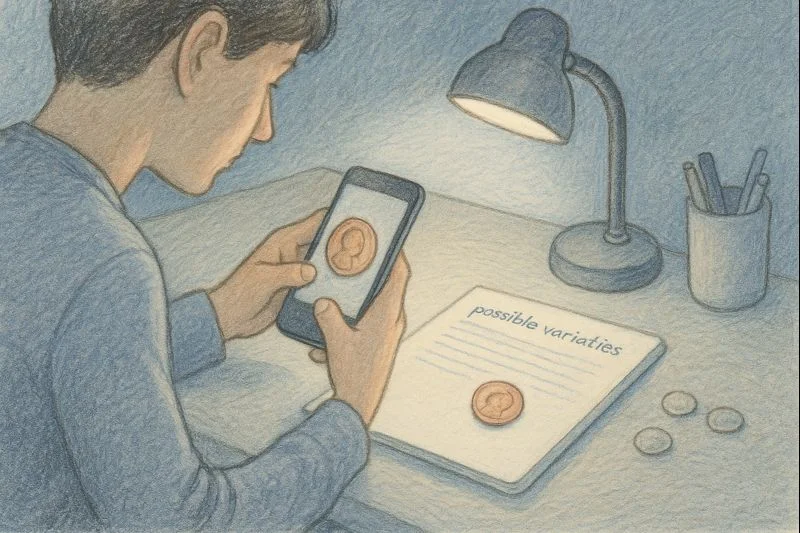
Many collectors now use digital tools to simplify this step. Coin ID Scanner helps flag overlooked cents quickly during sorting by confirming year, minting range, composition, diameter, and weight from a photo. Its collection management feature allows users to tag coins and group them by value, variety candidate, or review status. Premium smart filters and the AI Helper make it easier to surface sleepers buried in large cent batches.
Why Quiet Rarities Remain Undervalued
Market behavior explains much of the disconnect. Flashy keys attract attention. Subtle coins demand effort. That gap keeps prices inefficient until population data tightens or auction results force recognition.
By the time a quiet rarity becomes widely known, the window closes. Early identifiers benefit from condition scarcity and limited competition. This pattern has repeated across decades of Lincoln cent collecting.
Quiet rarities reward discipline. They do not announce themselves. They wait for collectors willing to inspect carefully, verify consistently, and log intelligently. Pennies like the 1970-S DDO, 1992 Close AM, or 1911-S prove that value often hides behind weakness, not perfection.
For collectors focused on process rather than noise, these cents offer one of the most efficient paths to discovery in modern numismatics.